

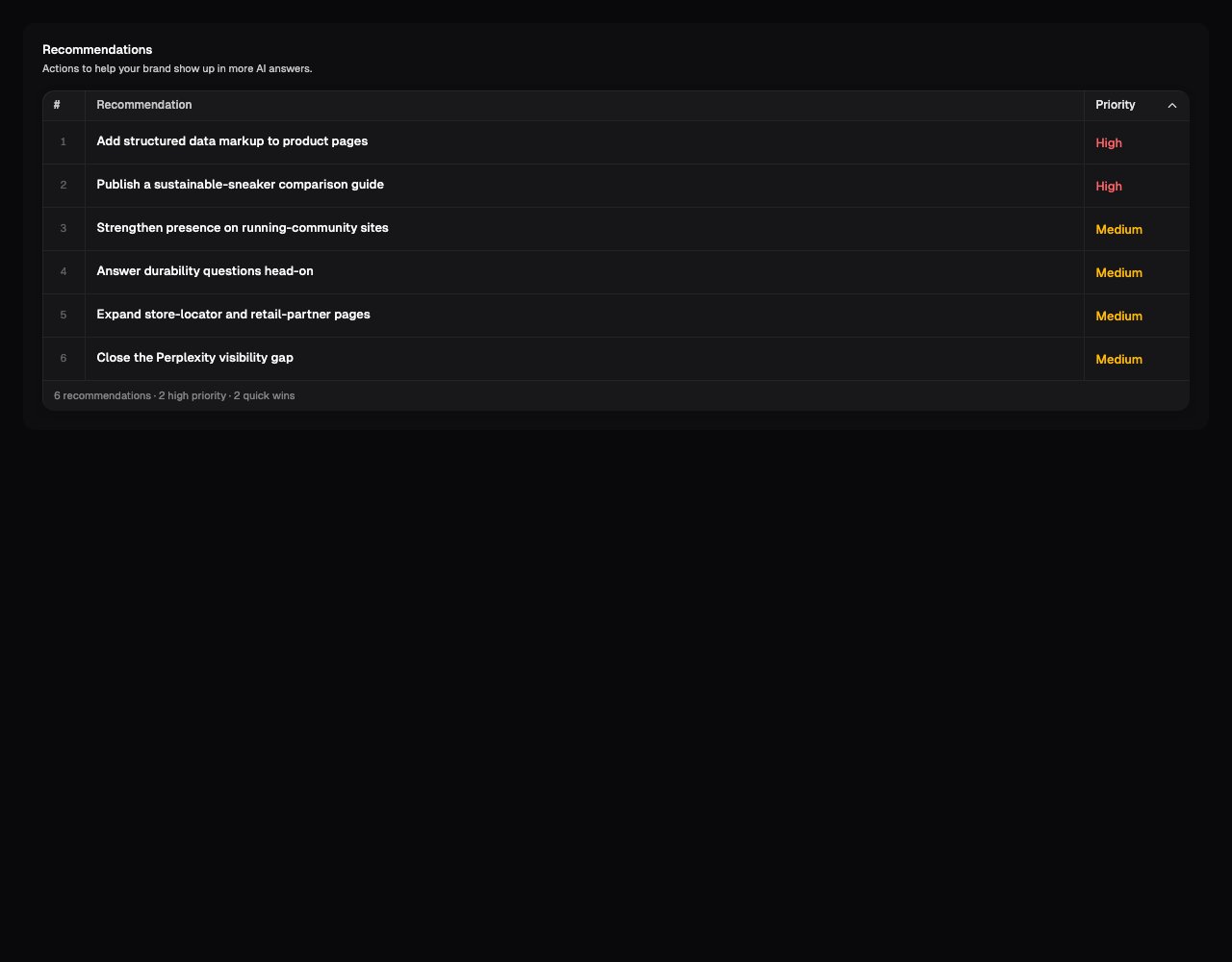
Read each recommendation
Each row in the list is one suggested action, with a priority next to it:Open a recommendation to see the full picture
Click a row and a panel opens with everything behind that suggestion: what to build, why it matters, which questions it targets, and where AI assistants currently look for information instead. The panel also shows: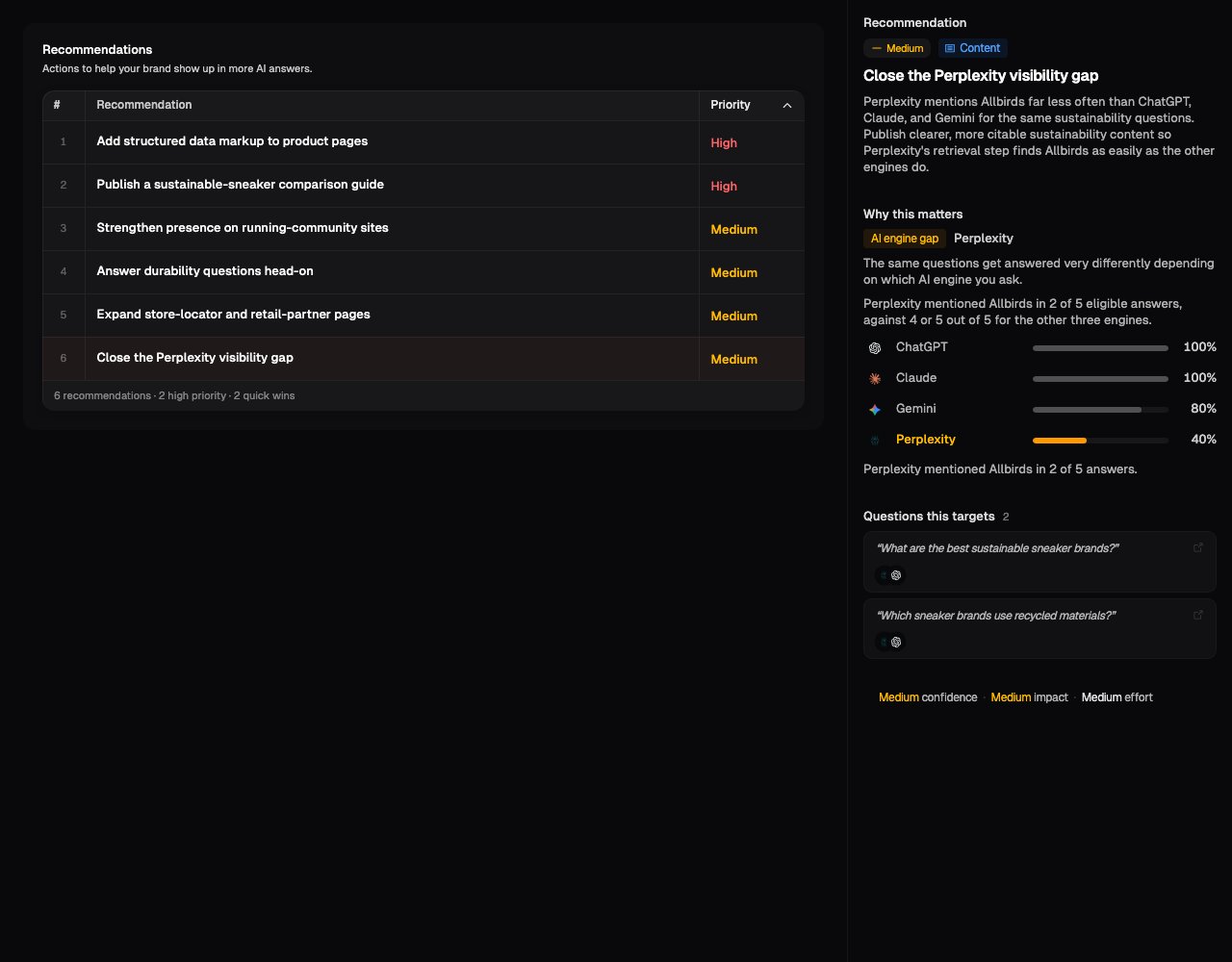
- Content: Create or improve pages, articles, comparisons, and on-page explanations.
- SEO: Make content easier to discover and better aligned with relevant searches.
- Technical: Improve structure or implementation, such as structured data or page organisation.
- Outreach: Strengthen third-party signals through sources such as reviews, directories, publishers, or partners.
Check the evidence before acting
Open a recommendation to see its evidence, when evidence is available. Check:- which prompts and responses support the suggestion;
- whether the pattern appears more than once;
- whether the underlying claims are factually correct; and
- whether the proposed action fits your audience, strategy, and publishing constraints.
Decide what to do first
A practical review order is:- Correct factual problems. Prioritise repeated inaccuracies about products, prices, locations, or capabilities.
- Review high-priority patterns. Confirm that the evidence is strong and the affected prompts matter to the business.
- Balance impact and effort. A quick win can be useful, but a larger strategic action may address more important gaps.
- Group related work. Several recommendations may be symptoms of the same missing page, weak explanation, or source problem.
- Record the change. Note what was changed and when, so later scans can be compared with it.
Track what happens next
After making a change, compare the relevant prompts and metrics in later completed scans. Results may move at different times across models, and a change between scans does not by itself prove that your work caused it. If the result does not improve, re-check the responses and references. The information may not have been picked up yet, the evidence may exist in conflicting sources, or the original recommendation may not have addressed the real issue.What’s next
Prompt Results
Verify the responses and prompts behind a recommendation.
Brand Scorecard
Compare your metrics in later scans.