

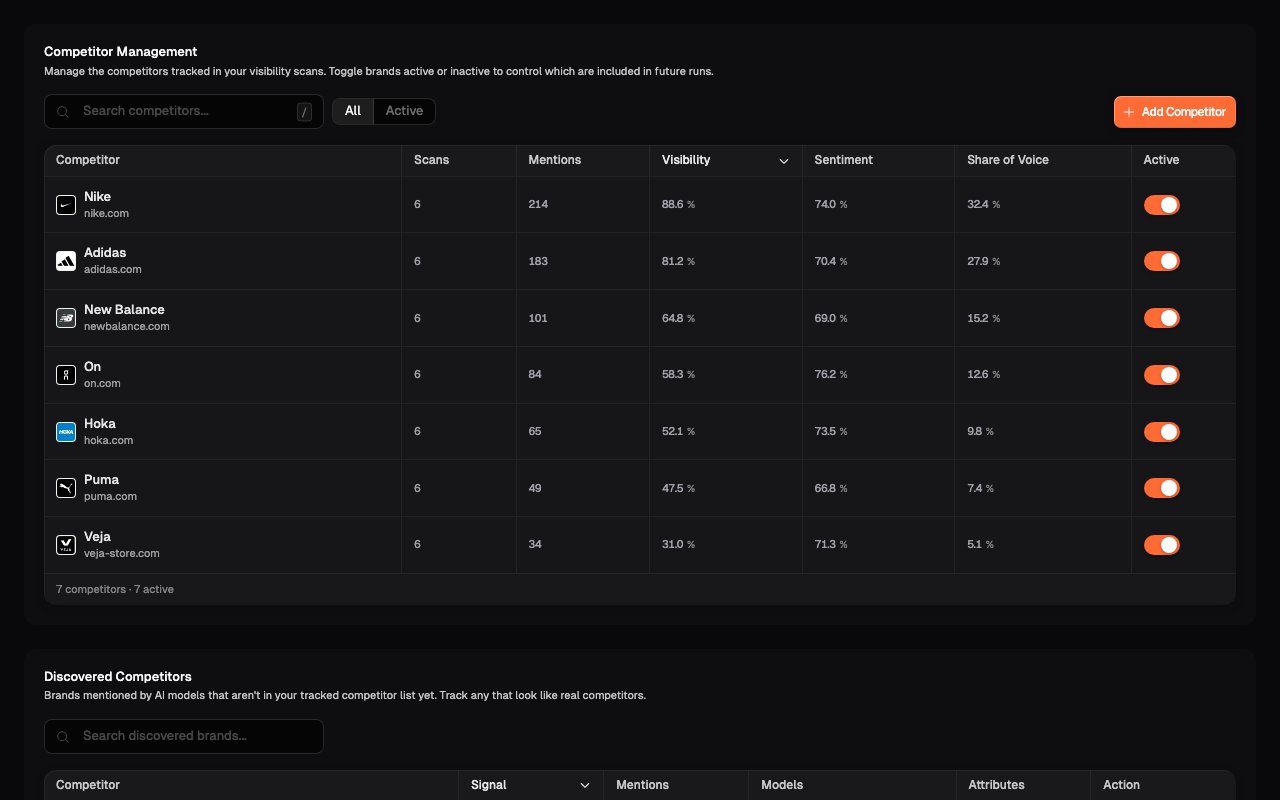
Competitor Management
The tracked list shows every competitor your scans currently measure, with the numbers from your scan history alongside each one:- Visibility: how often the competitor shows up in AI responses
- Share of Voice: how much of those answers they occupy
- Sentiment: the tone of how they’re described
- Mentions and Scans: how much data sits behind those numbers
- Add a competitor by business name or domain (e.g.
Acme Corporacme.com) - Toggle a competitor active or inactive: inactive competitors stay in the list but aren’t measured in future scans
- Search the list once it grows
- Remove anyone who isn’t a real competitor. A business in the same broad category but a different market isn’t a useful comparison.
- Add anyone obvious that’s missing. Competitors who don’t rank well in Google but still compete for customer attention often need to be added manually.
- Keep the list tight. Five to eight direct competitors produce clearer comparisons than twenty loosely-related ones.
Discovered Competitors
Scans regularly surface brands you didn’t ask about. The Discovered Competitors table lists brands mentioned by AI models that aren’t in your tracked list, with how often they came up (Mentions) and how strong the Signal is. This is one of the more quietly useful views in the product: it’s the market as AI assistants see it, not as you assume it is. If an unfamiliar name keeps appearing next to yours, that’s a competitor in the eyes of the models. Click Track to promote it to your tracked list, and future scans will measure it properly.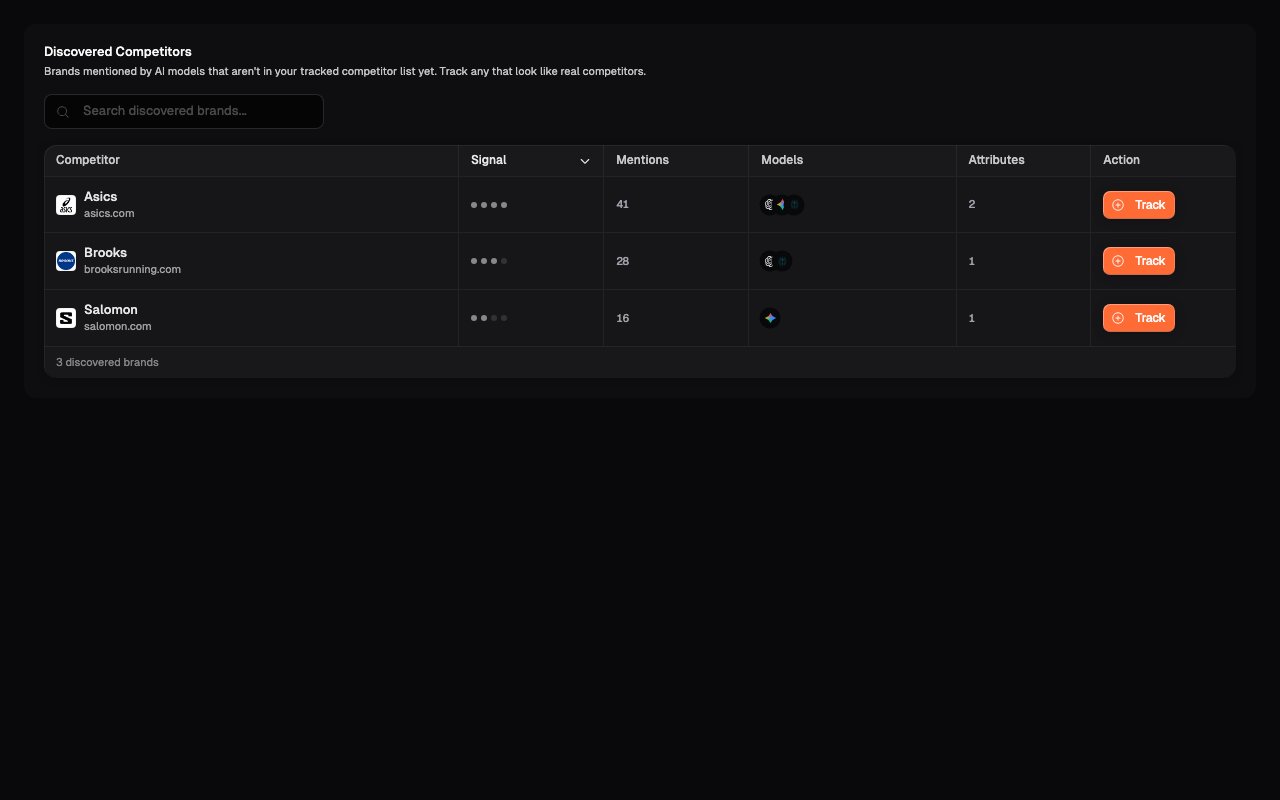
Changing competitors mid-history
Adding or removing competitors changes what future scans measure; past results are never rewritten. Trend views mark scan-configuration changes so you can tell a genuine market shift from a measurement change. See Brand Scorecard.What’s next
Prompt Library
The other half of scan relevance: the questions each scan asks.
Brand Scorecard
Where the competitor comparison plays out over time.